
Top Kitchen Renovation Trends in Auckland
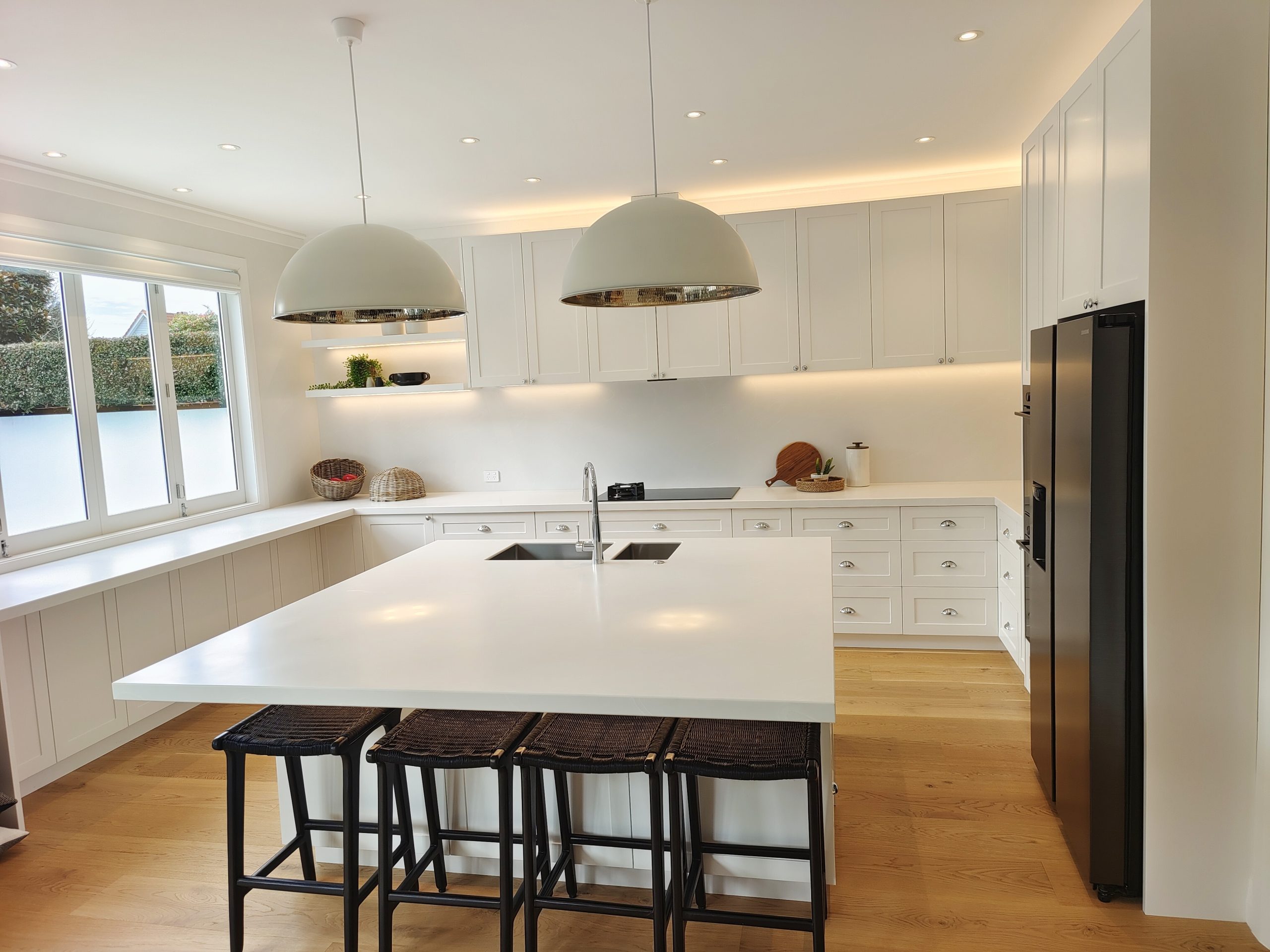
Kitchen Renovation Cost Brackets in Auckland
The average cost of a new kitchen in New Zealand typically falls into one of three main tiers:
- Cosmetic Update: $5,000 - $15,000
- Full Mid-Range Renovation: $25,000 - $60,000
- High-End Architectural: $80,000+
Three primary factors determine project costs: material selection (laminate versus engineered stone), appliance quality, and layout changes requiring intensive labor for plumbing and electrical work. Experts recommend setting aside a 10-15% contingency fund for unexpected discoveries during demolition.
Assembling Your Auckland Renovation Team
Your renovation team typically includes a kitchen designer, builder, and joiner. The designer focuses on layout and spatial flow, the builder handles construction work, and the joiner creates custom cabinetry and benchtops.
Start with a designer if layout problems are your main concern, cramped spaces or desired structural changes. If you're satisfied with the layout and only need cosmetic updates, contact a kitchen joinery specialist directly. Many reliable builders maintain established relationships with top designers and joiners, streamlining the process.
The 5-Step Kitchen Renovation Process
On-site construction typically lasts four to eight weeks for standard Auckland renovations:
- Design & Planning: Layout finalization and budget confirmation
- Selections & Ordering: Choose benchtops, cabinet finishes, handles, appliances, and splashbacks
- Demolition & Preparation: Remove old kitchen and prepare space for plumbing/electrical changes
- Construction & Installation: Install new cabinetry, benchtops, and appliances
- Finishing Touches & Handover: Install splashback, final painting, professional cleaning
Set up a temporary kitchen in your garage or dining room before demolition begins, utilizing a microwave, slow cooker, and outdoor BBQ to maintain household function.
Building Consent Requirements in Auckland
A building consent is required when moving or relocating kitchen elements. Simple like-for-like replacements, swapping benchtops or refacing cabinet doors, typically don't require consent. However, moving walls, adding windows, or relocating sinks and ovens almost always do.
Your qualified builder or designer will identify consent requirements and manage applications. Ask early: "Based on my plans, will we need a building consent?" to clarify your timeline and budget.
Trend 1: The Rise of Sculleries
Sculleries (butler's pantries) are small support kitchens addressing the challenge of open-plan living. These hidden zones accommodate coffee machines, toasters, and cooking clutter, allowing the main kitchen to function as a stylish social hub.
Many compact kitchen renovations convert oversized pantries or adjacent laundries into functional sculleries, proving you don't need extensive floor space to incorporate this trend.
Trend 2: Benchtop Materials and Design
Laminate
Laminate offers budget-friendly options with diverse colors and patterns, though it's susceptible to scratches and heat damage.
Engineered Stone
Engineered stone balances durability and design, combining crushed quartz with resin to create non-porous, stain-resistant surfaces. This material comes in consistent patterns and requires minimal maintenance.
Natural Stones
Natural stones like marble and granite provide unique beauty but demand sealing and careful maintenance. Visit showrooms to see how light interacts with larger surfaces before deciding.
Waterfall Edge Design
The waterfall edge design, where benchtop surface flows seamlessly down island sides, creates a luxurious, solid appearance using engineered stone effectively.
Your 3-Step Action Plan
- Define Your 'Why': Identify the top three kitchen frustrations
- Set a Starting Budget: Choose a realistic range from the three tiers outlined
- Book One Consultation: Contact a trusted kitchen designer or builder
Get a Free Quote or call 0800 991 234 for expert consultation.