
House Extension Cost Auckland 2026: Real Prices, Timelines & What to Sort First
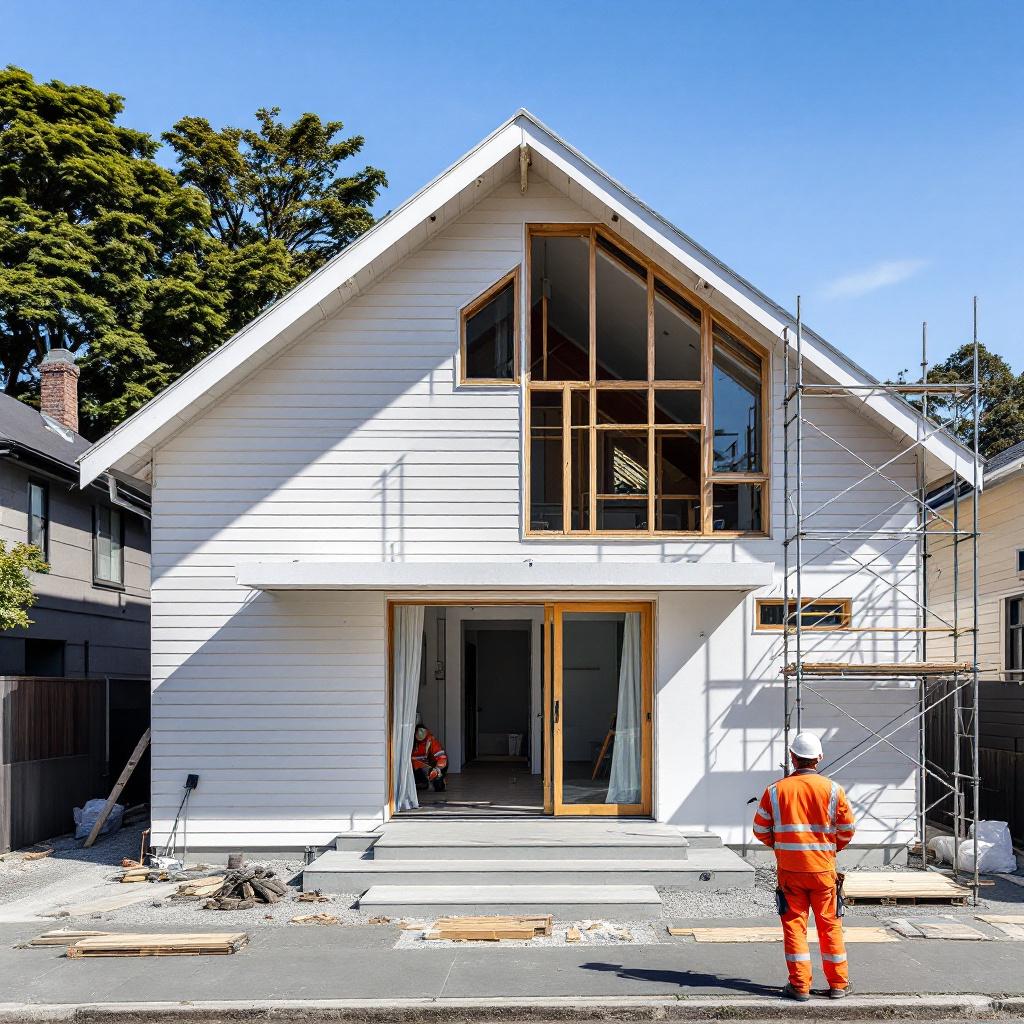
It started with a second baby and a kitchen bench covered in laundry. A family in Mt Albert stared at their three bedroom weatherboard on a Sunday night and did the maths: sell up and move to the outer suburbs, or stay and extend. Auckland prices being what they are, "move for space" meant a 45 minute commute and a school change. So they stayed, planned an extension, and spent the next ten months learning every way a house extension cost in Auckland can quietly balloon.
Most homeowners arrive at the extension conversation the same way. You love the street, the school zone, the trees out back. You just need another 25 to 40 square metres and a room that doesn't double as storage.
This guide walks through what a 2026 Auckland extension actually costs, where the surprises hide, how long the build really takes, and the decisions worth making before anyone swings a hammer.
Free scope and budget check. If you're weighing up an extension versus moving, book a site visit with QK and we'll map out a realistic cost range for your home: qkrenovation.co.nz/contact
What Happened to the Mt Albert Family (and Why It Matters)
They got three quotes. The cheapest came in at $185,000 for a 28 square metre rear extension, the most expensive at $310,000. Same drawings, same brief. The difference was almost entirely in the scope assumptions and how each builder handled the site's slope, the existing foundations, and the services relocation.
They went with the mid quote (around $245,000) after realising the cheapest had left out ground works, a new consent application, and any allowance for the retaining wall the council eventually required.
The lesson is the same one every Auckland homeowner runs into: the square metre rate on its own tells you very little. What fills out the number is the site, the spec, and the stuff you can't see from the street.
- Cheap quotes often hide exclusions: ground works, retaining, consent, provisional items
- Two builders pricing the same drawing can vary 30 to 50 percent before spec changes
- An apples to apples comparison requires a full scope breakdown, not just a lump sum
House Extension Cost Auckland: 2026 Price Bands
For budgeting conversations in 2026, most Auckland extensions fall into one of these ranges on a per square metre basis. These are market bands, not fixed quotes.
| Extension type | Typical spec | 2026 Auckland range (per m²) |
|---|---|---|
| Basic single room (living or bedroom) | Standard framing, simple roof, minimal services | $3,200 to $4,800 |
| Mid range family extension | Open plan living, laundry upgrade, some plumbing | $4,500 to $6,800 |
| Extension with bathroom or kitchen | Full wet area, tiling, joinery | $5,500 to $8,000 |
| Second storey addition | Structural reinforcement, new stairs, roofline change | $6,500 to $9,500 |
| Premium or architectural build | Custom joinery, complex cladding, specialist glazing | $8,000 to $12,000+ |
So a 30 square metre mid range family extension in Auckland typically lands between $135,000 and $204,000, before you add consent fees, ground works, and any surprises after demolition.

Why the Spread Is So Wide
A few line items account for most of the variance between quotes:
- Foundations: a flat site with room to pour a slab is a different job from a sloping Mt Eden site that needs piles
- Services: moving a kitchen, adding a bathroom, or upgrading the switchboard adds labour and consent complexity
- Cladding match: matching existing weatherboards, bricks, or plaster finishes can cost more than recladding the whole extension in something modern
- Roof tie in: joining a new roof to an old one often triggers flashing, gutter, and weathertightness work beyond the extension footprint
- Structural work: removing a load bearing wall or cutting into the existing roof pitch needs engineering and steel
Takeaways:
- Budget on full project cost, not the per square metre headline
- Quotes that skip ground works, consent, and provisional sums are not comparable
- Sloping sites, second storeys, and wet areas are the three biggest cost drivers
Do You Need Council Consent for an Auckland Extension?
In almost all cases, yes. A structural extension that adds floor area, alters the building envelope, or touches plumbing or drainage needs building consent from Auckland Council.
There are some exemptions under Schedule 1 of the Building Act 2004 (for example, a single storey detached structure under 30 square metres with no plumbing, built under supervision). Most family extensions do not qualify because they connect to the existing house and touch services.
What the Consent Process Looks Like
- Design and documentation: architect or designer produces consent drawings, specifications, and engineering reports
- PIM and building consent application: lodged with Auckland Council, usually takes 20 working days statutory plus requests for information
- Resource consent (if triggered): required if the extension breaches height in relation to boundary, site coverage, or other district plan rules
- Construction: council inspections at key stages (foundations, framing, cladding, drainage, final)
- Code Compliance Certificate (CCC): issued once all inspections pass and paperwork is in order
Consent fees for a typical extension in 2026 run between $3,500 and $8,000+, depending on scope and whether resource consent is needed. Design and engineering costs add another $8,000 to $25,000 for most family extensions.
Plan for 10 to 18 weeks between engaging a designer and breaking ground. That's before the build itself starts.
Takeaways:
- Assume building consent is required unless a designer confirms an exemption
- Resource consent is common when extending close to boundaries in Auckland
- Factor 3 to 5 months of design and consent time before any construction

Realistic Extension Timeline for an Auckland Build
Once consent is granted, most Auckland extensions take 4 to 9 months on site, depending on size and complexity. The stages and typical durations look like this:
- Site setup and demolition: 1 to 2 weeks
- Foundations and ground works: 2 to 4 weeks (longer for piled or retaining jobs)
- Framing and roof: 3 to 6 weeks
- Weathertightness, cladding, windows: 3 to 5 weeks
- Services rough in (plumbing, electrical, gas): 2 to 4 weeks, overlapping with other stages
- Insulation, linings, stopping: 3 to 5 weeks
- Joinery, tiling, finishes: 4 to 8 weeks
- Council inspections and CCC: spread through the build plus 2 to 6 weeks for final sign off
A single room extension with no wet areas can finish in 12 to 16 weeks on site. A mid range 30 to 40 square metre family extension usually runs 20 to 30 weeks. Second storey additions and extensions with a new kitchen or bathroom commonly push 30 to 40 weeks.
What Makes Timelines Blow Out
The same things that blow out budgets tend to blow out timelines:
- Late design changes after consent is granted (triggering amendments)
- Material lead times (especially imported tiles, tapware, and windows)
- Weather, particularly during roof opening and weathertightness stages
- Subtrade coordination gaps (waiting for the electrician or plumber between stages)
- Surprise structural work uncovered during demolition
Takeaways:
- Plan for 4 to 9 months on site plus 3 to 5 months of design and consent
- Lock finishes and fixtures before framing starts to avoid amendments
- Building in winter is possible but roof and cladding stages need weather windows
How to Keep an Extension Budget Under Control
The best builders in Auckland will tell you the same thing: the cheapest way to keep your extension on budget is to spend more time on the front end.
Five Decisions That Save the Most Money
- Design within the existing footprint where possible: cantilevering over a driveway or extending over a garage is often cheaper than adding foundations
- Keep the kitchen and bathroom where they are: relocating wet rooms adds tens of thousands, and the functional gain is often marginal
- Match cladding intelligently: a clean contrast cladding on the new addition is usually cheaper than trying to match 40 year old brick
- Pick mid range fixtures and joinery: the gap between mid range and premium joinery often adds 15 to 25 percent to total fit out cost with limited day to day benefit
- Lock the scope before consent is lodged: every post consent change requires either an amendment or a variation, both of which add cost and time
Where It's Worth Spending More
- Waterproofing in any wet area extension (the cost of failure is enormous)
- Insulation and double glazing (pays back in comfort and energy bills for decades)
- Structural engineering review (catches issues early when they're cheap to fix)
- A detailed quantity surveyed (QS) cost plan if the project is over $250,000
Not sure where to draw the line? Our team can walk through your plans, flag the cost drivers, and help you prioritise spend. Book a free consultation.
Takeaways:
- Most budget blowouts come from scope changes after consent, not labour or materials
- Keep wet rooms where they are unless relocating unlocks a genuine layout win
- Spend on waterproofing, insulation, and engineering; save on finishes

Extension vs Move vs New Build: How to Decide
For Auckland homeowners, the numbers often shake out like this:
- Selling and moving up: agent fees (2 to 4 percent), legal, moving, and the price gap to a bigger house. On a $1.2M sale moving to a $1.6M home, total transaction cost alone is often $80,000 to $120,000 before the price gap
- Extending: $150,000 to $400,000 depending on size and spec, with the value staying in your existing home
- Knock down and rebuild: $600,000 to $1.2M+ for a full new build on the existing section, typically better returns per dollar but much higher total commitment
Extending makes the most financial sense when the location is worth keeping, the existing house is structurally sound, and the extra space you need is roughly 20 to 50 square metres. Beyond that, a rebuild often starts to look better on a cost per square metre basis.
For a deeper look at the tradeoffs, see our guide on home renovation priorities for Auckland homeowners.
Takeaways:
- Moving costs are rarely free; add 8 to 12 percent of the sale price before upgrading
- Extensions win when the location and existing structure justify keeping the house
- For larger footprint increases (over 60 square metres), rebuild economics often improve
FAQs
How much does a 30 square metre extension cost in Auckland?
For a mid range family extension, expect $135,000 to $204,000 plus consent, design, and ground works. Wet area extensions, sloping sites, and second storeys push the number higher.
How long does council consent take in Auckland?
The statutory clock is 20 working days, but real timelines including requests for information and resource consent typically run 8 to 14 weeks for an extension.
Can I stay in the house during the extension?
Usually yes, if the extension is sealed off from the main house and your kitchen and bathroom are not being relocated. Expect dust, noise, and restricted access. Families often move out for the last 4 to 6 weeks of finishing work.
Is a second storey cheaper than a ground floor extension?
Not usually. Second storeys avoid new foundations but add structural reinforcement, new stairs, and roof changes. They're typically 10 to 20 percent more expensive per square metre than a straightforward ground floor addition.
What's the biggest hidden cost?
Retaining walls, site access, and matching existing cladding or roofing. These are commonly underquoted or excluded and surface as variations once the build starts.
Next Step: Get a Real Number on Your Project
Every Auckland extension is different, and the only way to move from "rough range" to a budget you can plan around is a proper site assessment and scoped cost plan. QK handles full home renovations and extensions across Auckland, from design and consent through to final inspection.
If you want a realistic cost range and timeline for your home, book a site visit with our team. No obligation, and we'll flag the cost drivers specific to your site before you commit to a design direction.
See more on our process and recent projects on the Home Renovation and Extensions service page.